Holiday Dog Anxiety: 7 Science-Based Strategies to Keep Your Dog Calm During Christmas
The holidays bring joy to most households—twinkling lights, cheerful gatherings, festive meals, and quality family time. But if you're a dog owner, you might notice something different in your companion during this season: anxiety, restlessness, destructive behavior, or withdrawal. According to veterinary behaviorist data, 35–45% of dogs show increased stress signals during the holiday season. The very things that make humans love December—the chaos, gatherings, and disrupted routines—are exactly what stress many dogs most.
The good news: there are science-backed strategies to help your dog not just survive the holidays, but genuinely relax through them. This guide walks you through seven evidence-based approaches you can start using immediately.
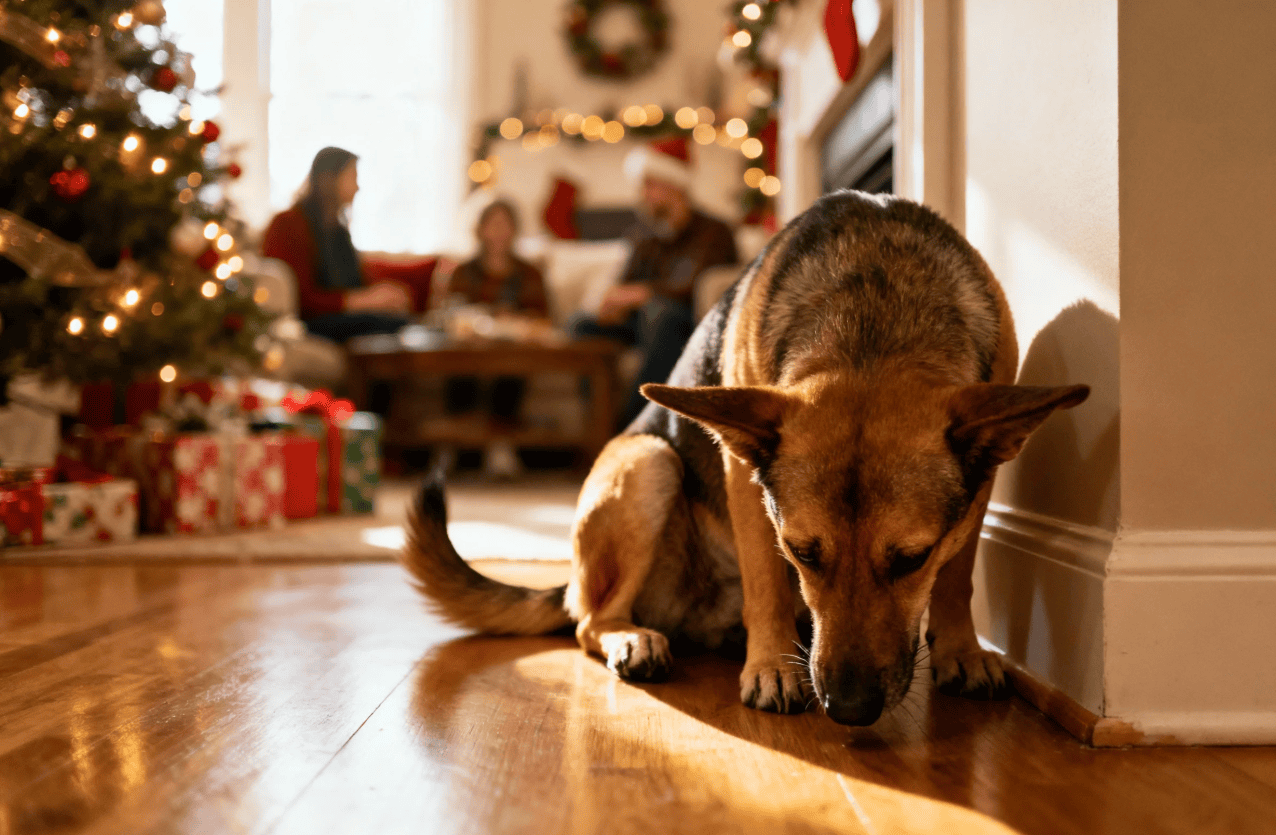
Why the Holidays Create the "Perfect Storm" for Dog Anxiety
Before solving the problem, it helps to understand what's happening in your dog's nervous system.
The Triple Threat
Dogs experience holiday stress from three simultaneous sources:
1. Routine Disruption (the biggest factor)
Dogs are wired to thrive on predictability. When feeding, walking, and sleeping schedules suddenly shift, their stress system gets activated. A 2023 Journal of Veterinary Behavior study found that dogs on consistent schedules showed 40% lower cortisol (stress hormone) than dogs with irregular routines—even when the “busy” schedules actually involved more total activity.
During December, routines often change all at once:
- Wake times shift
- Feeding is delayed for cooking or parties
- Walks are skipped due to hosting
- Sleeping locations change to accommodate guests
- Alone time disappears
2. Environmental Overstimulation
Your home transforms: blinking lights, moving decorations, new smells, loud music, and constant doorbells. Animal acoustics research shows typical holiday noise can increase 30–40% above baseline—equivalent to going from normal conversation to heavy traffic.
3. Your Own Stress
Dogs mirror human stress. Studies in Hormones and Behavior show that dogs living with stressed owners can have cortisol levels comparable to their humans, even without direct stressors. When you’re rushed, tense, and distracted, your dog feels it.
These three factors amplify each other, creating a cascade: schedule changes → anxious dog → stressed owner → less patience → more anxious dog → behavior problems.
Part 1: Recognizing Anxiety vs. Normal Holiday Excitement
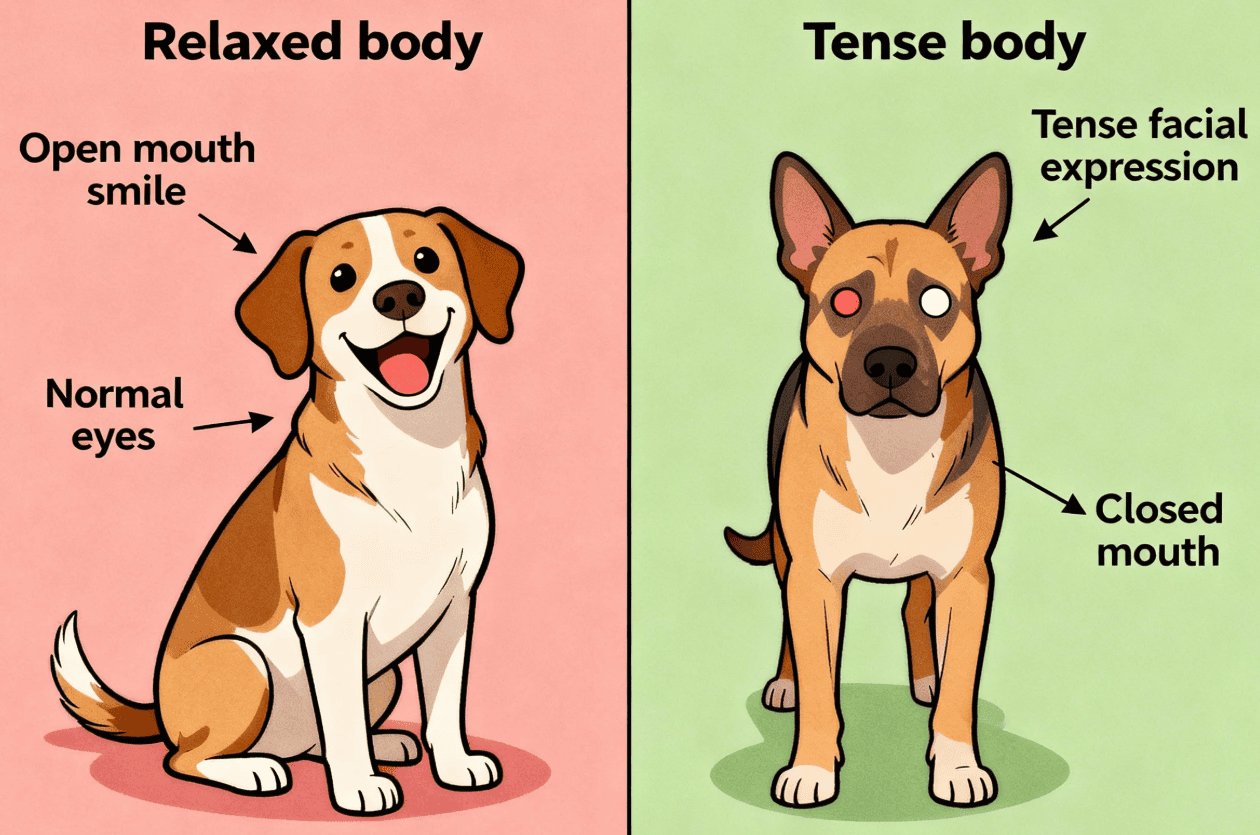
Not every change in behavior is a problem. Excited dogs can be bouncy and loud yet still able to settle. Anxious dogs can’t.
Behavioral red flags
- Aimless pacing that never resolves into rest
- Whining without clear trigger
- Destructive chewing or scratching
- Inability to settle in any one spot
- Avoiding activities they usually enjoy
- Extreme clinginess or attention-seeking
- House-training regression despite being previously reliable
Physical red flags
- Panting at rest
- Excessive yawning without being tired
- Dilated pupils, trembling, drooling
- Refusing food or treats
Digestive red flags
- Diarrhea, vomiting, constipation, or sudden gas
The key distinction: excited dogs cycle up and then down. Anxious dogs stay "stuck on."
Strategy #1: Protect the Routine
This single strategy often delivers 30–40% of the improvement on its own.
Feeding
- Keep feeding times identical to the normal schedule.
- If you usually feed at 7:00 AM and 6:00 PM, keep those times—even if you’re sleeping in or cooking.
- Use alarms or share responsibility with family members; consider automatic feeders as backup.
Exercise
- Match both timing and approximate duration of daily walks.
- Prioritize the morning walk—it helps set your dog’s neurochemistry for the entire day.
Sleep
- Stick to the same bedtime and sleeping location whenever possible.
- Protect your dog’s sleep space from late-night guests, noise, or kids.
Alone time
- Schedule daily 30‑minute quiet periods away from guests and activity.
- Treat this like a non‑negotiable appointment for your dog’s mental health.
When explaining this to family, frame it as health care, not “being rigid”: keeping the dog’s schedule stable literally changes their stress hormones.
Strategy #2: Build a Dedicated “Safe Haven”
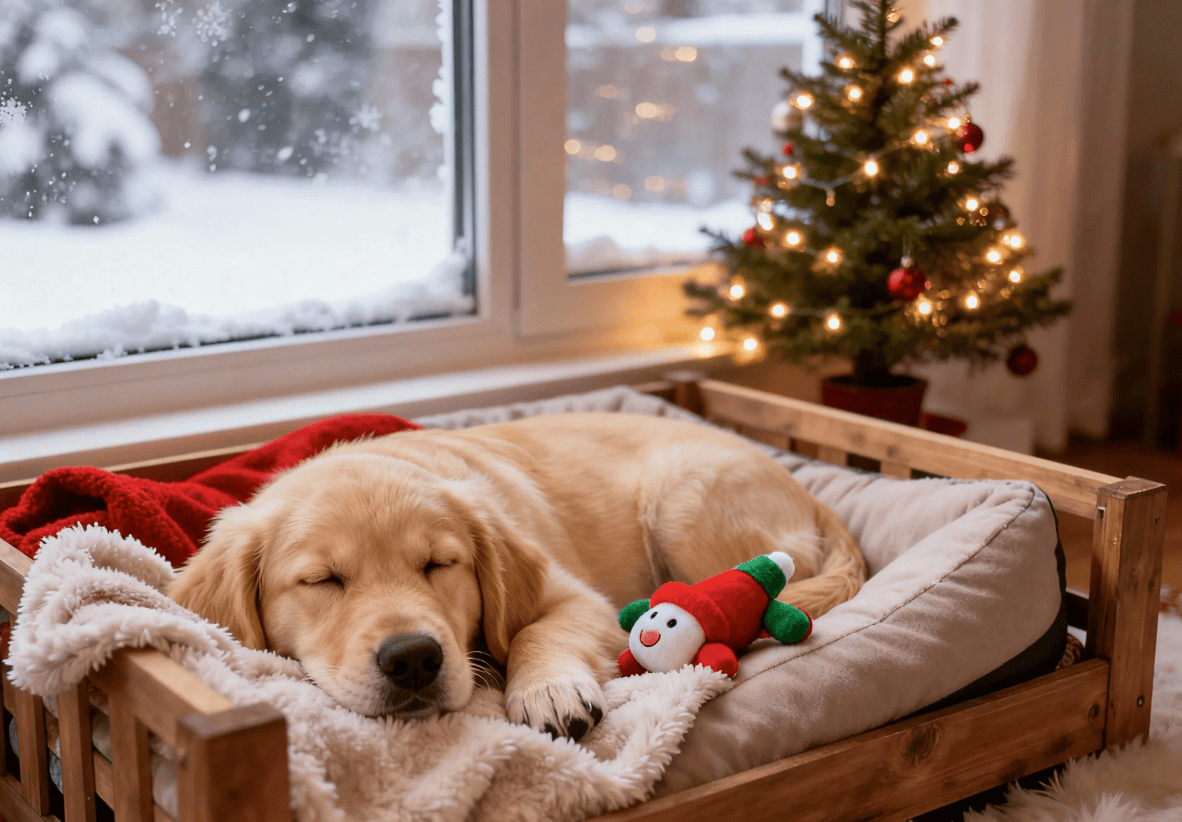
Anxiety escalates when dogs have no escape from stimulation. A safe haven is a quiet retreat, not a punishment.
Choosing the space
- Away from main traffic areas
- With a door or baby gate you can close
- Ideally with soft, indirect light and minimal outside noise
What to include
- Comfortable bedding that smells like “normal life”
- Fresh water
- A few favorite toys (not high‑energy puzzle feeders)
- Calming background sound (white-noise machine or dog-calming music playlist)
Training the safe space (start before peak season)
- Leave the door open and toss treats inside.
- Let your dog explore voluntarily.
- Pair the space with chews and calm time.
- Gradually increase the time they spend there while you’re home and relaxed.
Use the safe haven:
- When guests arrive or the doorbell keeps ringing
- During loud activities (gift unwrapping, parties, games)
- When your dog shows early stress signals
Strategy #3: Pheromones and Vet-Approved Supplements
Behavioral changes should always come first, but supportive tools can help.
Pheromone products (Adaptil and similar)
- Synthetic dog-appeasing pheromone with solid research backing
- Available as diffusers, collars, or sprays
- Typically takes 3–5 days to reach full effect—start early
Common supplement options (always check with your vet)
- L‑theanine – evidence-backed calming amino acid; usually started 1–2 weeks before peak stress.
- Omega‑3 fatty acids – help with overall brain health and can reduce anxiety over 4–6 weeks.
- Magnesium or veterinary herbal blends – sometimes recommended case‑by‑case.
Supplements and pheromones work best as add‑ons, not substitutes, for training, routine, and safe spaces.
Strategy #4: Structured Exercise and Mental Work
Anxious dogs often need more appropriate activity, not less.
Morning movement
- Aim for a 30–45 minute walk before the day gets busy.
- Consistent morning exercise reduces baseline anxiety and improves sleep.
Mental enrichment
- Short training sessions (5–10 minutes, several times daily)
- Sniff walks, food scatter games, lick mats, or simple puzzle toys
- Hide‑and‑seek games with people or toys
Avoid high-intensity play right before major events; use exercise to drain stress, not to wind the dog up before guests arrive.
Strategy #5: Guest Management and Clear Rules
Well-meaning visitors can unintentionally make anxiety worse.
Before guests arrive
- Brief them: your dog is easily stressed and you’re following a plan.
- Ask them to avoid rough play, surprise hugs, or feeding from the table.
During visits
- Watch body language closely; step in early if your dog looks overwhelmed.
- Use phrases like “They need a quick break” instead of labeling your dog as “mean” or “not friendly.”
- Stagger arrivals when possible instead of everyone walking in at once.
Physical tools like baby gates and closed doors make boundary‑setting easier and less awkward.
Strategy #6: When Medication Makes Sense
For some dogs, behavior changes plus environmental tweaks still aren’t enough. That’s when a conversation with your vet about medication is appropriate.
Signs to discuss medication:
- Refusing food for 12+ hours due to stress
- Self‑injury or severe property damage
- Extreme panic during specific triggers despite preparation
- Long history of anxiety outside the holidays
Vets may suggest short‑acting meds for specific events, longer‑term daily medication, or both. The goal is to lower anxiety enough that training and coping strategies can work—not to sedate your dog into “ignoring” distress.
Strategy #7: Manage Your Own Stress
Your dog reads your stress like a second language. Studies in Applied Animal Behaviour Science show that dogs of highly stressed owners have significantly higher cortisol levels.
Simple daily habits help:
- 10–15 minutes of breathing exercises, stretching, or quiet time
- Delegating some holiday tasks so you’re not constantly rushed
- Lowering expectations of a “perfect” holiday in favor of a peaceful one
Slow your movements, breathe more deeply around your dog, and keep your tone warm and steady. Your dog will notice.
Food Safety and Post-Holiday Transition
An anxious dog with an upset stomach will feel even worse. During the holidays:
- Keep chocolate, xylitol, grapes/raisins, onions/garlic, macadamia nuts, and fatty leftovers completely out of reach.
- Secure trash cans and block access to kitchen counters during meal prep.
After the holidays, don’t snap straight back to a new routine. Instead, phase back into normal life over 1–2 weeks, keeping safe spaces, exercise, and calming tools in place while your dog adjusts.
Holiday Anxiety Prevention Checklist
By mid‑November
- Choose and set up a safe haven room
- Begin training your dog to relax there
- Talk with family about dog‑friendly house rules
- Book a vet consult if you suspect medication or supplements might be needed
By early December
- Finalize routines for walks, meals, and sleep
- Start any pheromones or supplements per vet guidance
- Decide on daily quiet times and stick to them
During the holidays
- Protect core routines (meals, walks, bedtime)
- Watch for early anxiety signs and use the safe haven
- Enforce guest boundaries kindly but firmly
- Take care of your own stress levels
With preparation, your dog doesn't have to "endure" the holidays. They can experience December as another predictable, safe, and even enjoyable time of year—right alongside you.
Related Posts

The Ultimate Christmas Puppy Preparation Guide for First-Time Dog Owners
Bringing home a Christmas puppy? Use this holiday-ready checklist for supplies, schedules, anxiety management, and first-month health essentials.
Read More →
2025 Christmas Dog Names Trending Now: Data-Driven Insights
Discover the top Christmas dog names of 2025, why Twinkle, Noel, Frosty and more are exploding in popularity, and how to use the data to choose the right name.
Read More →